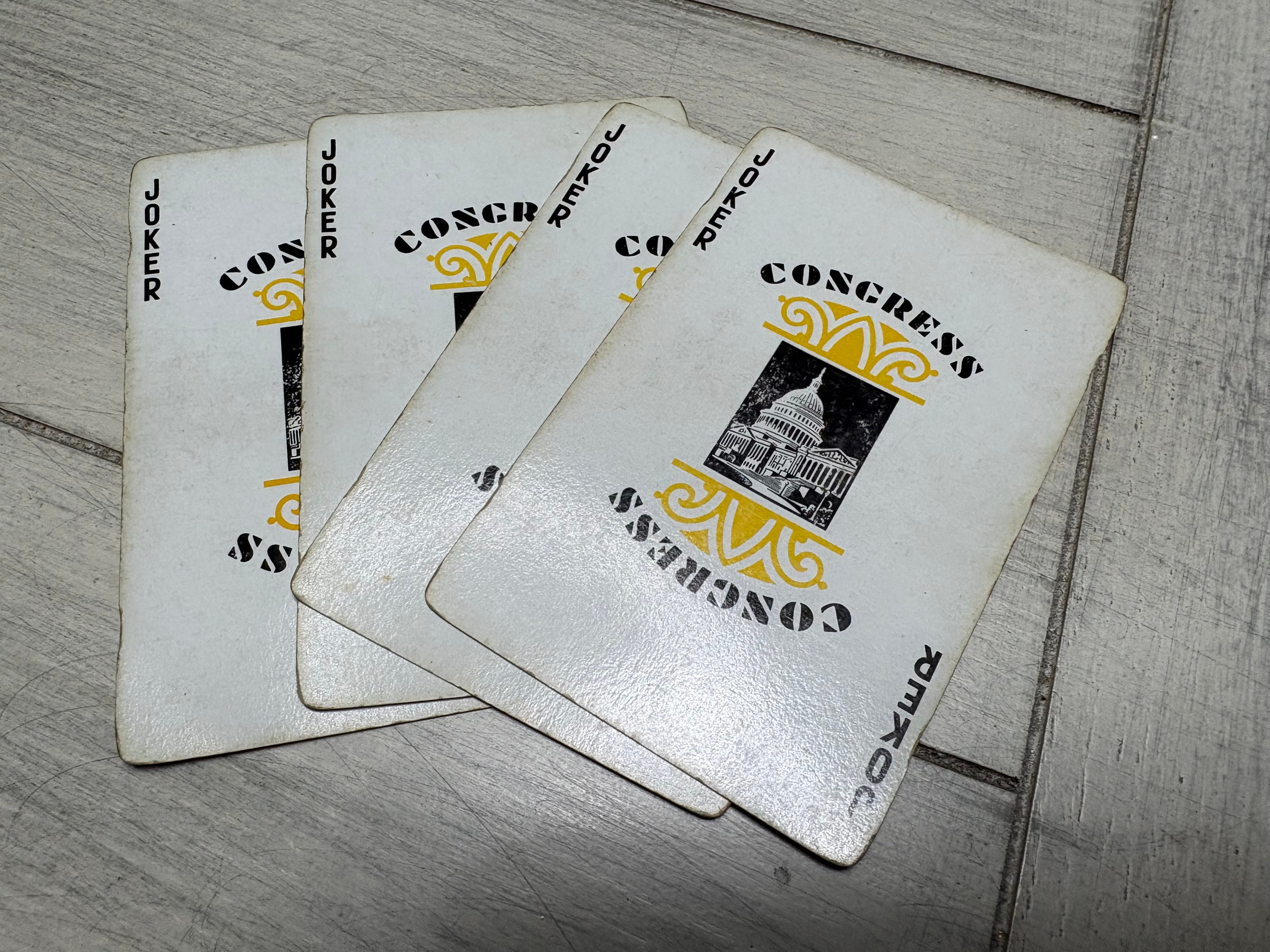
Double Solitaire
The turn of a smelly card

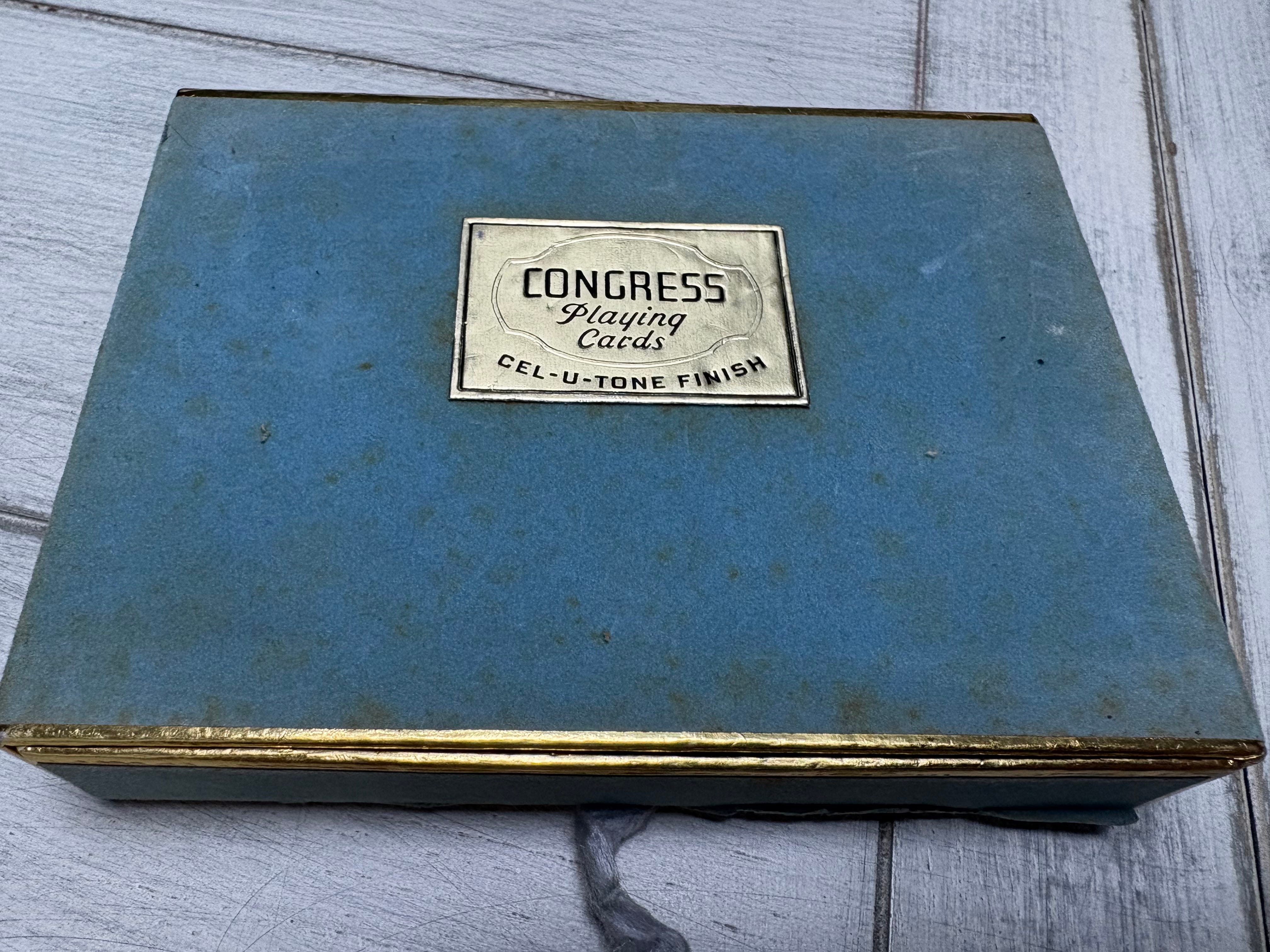
The old lady’s cards smell like cigarette smoke.
Everything smelled like this when these cards last saw action, whether you were in Alabama or 800 miles away learning this game in Ohio. It was weirder if you didn’t live in a nicotine haze back then. Someone in your house was sick, maybe from a lifetime of playing cards and listening to records and hotboxing that same carcinogenic mist in your automobile with the windows up.
My mom played Double Solitaire and it seemed like the height of sophisticated complexity when I was five years old. You needed two intact decks of cards, and you had to shuffle them together as one, a feat beyond my tiny hands and smaller attention span. It took up more space, required more thinking, and each hand seemed an epic saga, much longer and more involved than baby games like single-deck solitaire or war or rummy.
I’ve gone through a few phases in life where I play it obsessively for a short time, but the last one was years ago, well before my smartphone sucked a good portion of my brain out of my head with a crazy straw. Double Solitaire, it turns out, is a supreme example of mindless busy work, more shuffling and neatening stacks than thinking, analog doomscrolling for depressed young housewives and mothers, and for their occasionally befogged middle-aged offspring.
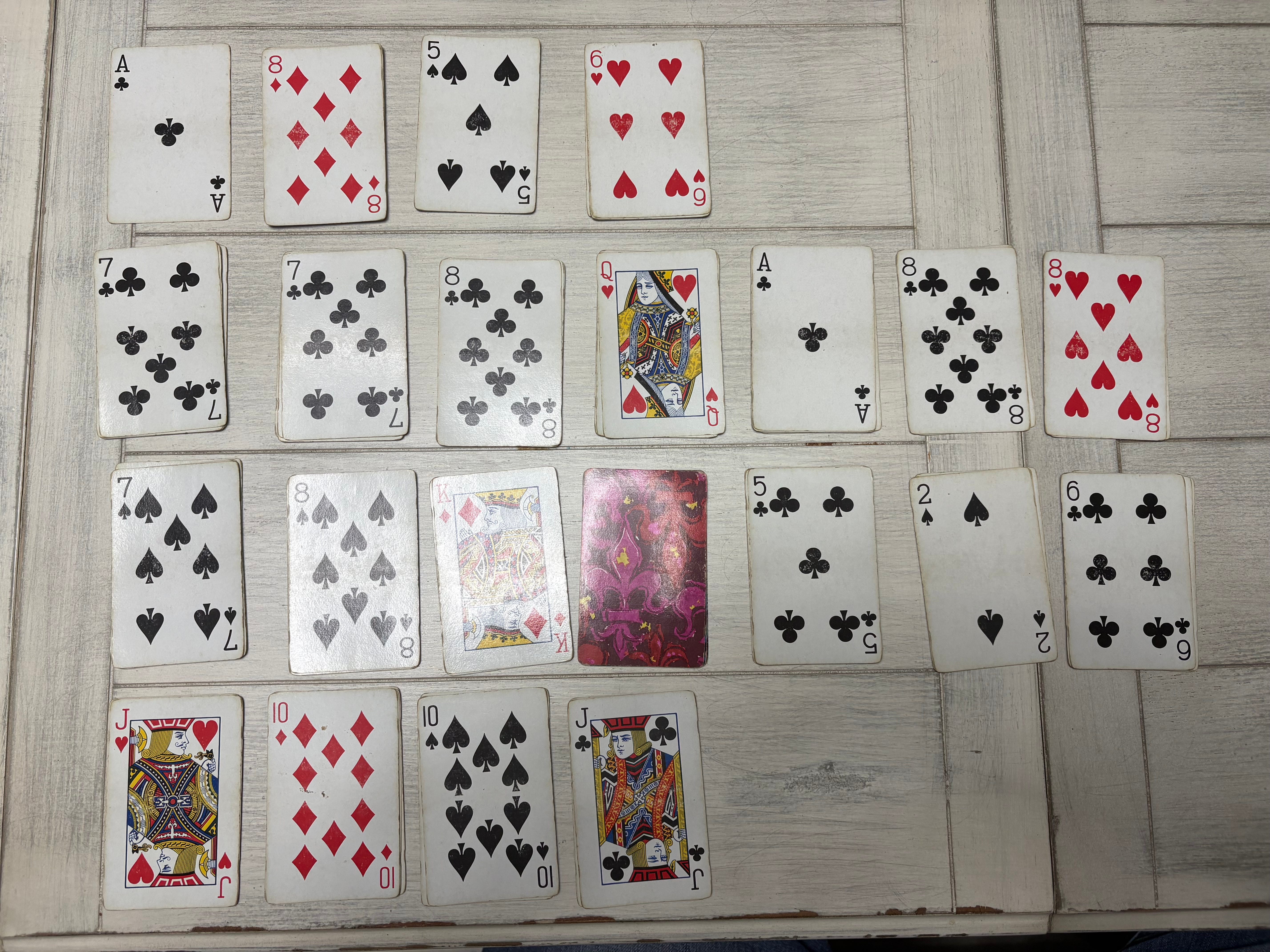
You make thirteen piles, each corresponding to a card value, with aces low. Lay the cards out into two rows, one two three four. The center space in the second row is your draw pile. Put that card face down, then do jack queen king, then go back to ace and lay down another layer. Any time the face-up card corresponds with the spot it’s in – a two in the two spot, a jack in the 11th box – drop the next card face down into the draw pile. An ace also earns you a draw card. An ace in the ace spot? Two draw cards in a row.
When you run out of cards, you have two rows of seven stacks each, the draw pile face down. You pull the first card, pick up its corresponding pile, put it face-up on the bottom, then fan out that pile like an Uno hand. You want to start four more piles on top, like regular solitaire, starting with an ace and hopefully going all the way to a king of each suit. But you’re also starting a second batch of four piles on the bottom of the playfield, those starting with kings and working backward.
It’d be easier to show you than tell you, but you’ve probably gotten the idea. Any time a face-up card on a pile can be played, you pull it and play it. You want to end up with eight piles in numerical order divided by suits. Which card is from which deck doesn’t matter, although that would be a rule variation that’d make this improbable game nearly impossible.
Like I said, there’s not much “play” to playing Double Solitaire. It’s all pretty much down to the luck of the shuffle. You have a little autonomy when both your top and bottom pile of one suit both need the same card, and you have to decide which one to feed, but besides that, the only effect you have on the game is a negative one if you miss a card you could have pulled off a pile and played. You spend more time setting up the board than you do playing, in most cases. It’s kind of a dud game if you’re looking to do anything but run test patterns in your cerebral cortex for ten or fifteen minutes.
And yet I keep reshuffling and laying out more hands, drawn to the blankness of the whole endeavor, likely scratching an itch fifty years dormant, invoking memories of my mom smoking Salem Light 100s and drinking Constant Comment tea and probably wondering how the hell she got where she was. Time died hard before TikTok.
I’d had the idea years ago of making a retro video game out of Double Solitaire, but I couldn’t get my head around keeping track of two decks of cards that both had to be interchangeable but unique to their space in the playfield. Today, shuffling the greasy old cards left behind by the 102-year-old estate sale lady, I mulled it over some more, and after dinner I knocked together some rudimentary code to deal the cards and name them properly on screen.
(If you’re interested, I treat the cards as 104 individual entities and only label them by their face numbers and suits for playfield display purposes. The computer will tell you it’s a jack of clubs, and draw a little 8x8 pixel club and the letter J, but for bookkeeping purposes that card is either card #50 or card #102.)
Assigning the shuffle and deal to the computer takes almost the entire activity out of the activity. I fear Double Solitaire, no matter how nice I make it look, will be as dull as the no-stakes video slot machine games every retro platform once displayed. It occurs to me that I could write the “game” to simply play itself, lay the cards out and let the display reach its inevitable conclusion with no help from a human – an overly complex screen saver.
Playing this game at this age reminds me of how many problems in my life were a result of lack of attention to process. I’d start brushing my teeth and couldn’t focus on doing a simple, boring task for the eternity it would take to finish. I loved having written but hated writing. I longed for a clean room and a cupboard full of washed dishes but abhorred the idea of simply dealing with one plate or piece of laundry at a time until the end goal was achieved.
I’ve come to find comfort in the process, which has helped me get work done and slowly build things like my business, some game projects, and a novel or two. Twenty-five minutes of focused work is a staycation from the world and my own intrusive thoughts, and that’s my jam after a lifetime of having a brain like a hummingbird. In that context, Double Solitaire – all process and no payoff, really – feels like a warm bath, even if it smells like stale cancer.