
Just a Half Size Shy
Sunday morning comin' down

A steady soaking rain drenched me as I loaded inventory and cardboard filler pads into the car. The wife’s Subaru, the first new car in our immediate family’s history, was in front of my ratty old work van in the driveway. Had we still been in the first month or two of novelty, I wouldn’t have dreamed of taking it across town in a downpour, but switching cars out was deemed too much hassle, so off I went.
I was still cognizant enough of its newness to take the city streets across town, rather than trust my fellow lane-meandering citizens on the highway in the rain. In the back of my mind, the usual circular argument clangs like a toy monkey with cymbals – but this makes the trip take longer, you’re on the road more, increasing your chances of – you know what? Shut up, brain, I’m takin’ the streets.
The filler pads are a pretty simplistic innovation I came up with a few years ago after people complained of getting cracked jewel cases. I just cut the 12x12” pads I use to protect LPs into fourths. You can fit one on each side of the CD in the mailer if you crimp one edge, which gives you the sturdiness of a box and the water resistance of a plastic mailer, at about half the cost of a box. For a while I was having my supplier cut 1000 at a time for me, but they kept delaying the jobs, so my wife volunteered to manually cut 12” pads with a boxcutter while she watches TV.
Taking the slow way becomes a ruin porn tour of the Rust Belt. I leave my fairly cozy little neighborhood, pass a few blocks churned under and made profitable by a monster hospital complex, pass a cemetery dating back to the 1850s, cross the gulf trench of the expressway over a steep bridge, and then I’m in our old neighborhood, the site of the house we fled after the 2008 market collapse and several break-ins. I pass crumbling buildings, weed-choked lots, defiantly kept-up churches.
Another hospital, then downtown and the river, and an even more ramshackle neighborhood along its eastern shore, all light industrial soot and grubby garages. The road looks bombed, the houses weedy and forlorn. Toledo’s massive grain elevators and the High Level Bridge, a majestic Great Depression-era span, loom in the near distance. Once I pass those, I turn down an even more rutted street, skim over a few mobile home parks and clusters of dead-end streets, and then the pavement magically smooths out as we hit the suburban city limit and the terrain opens up into the carved-up farmland that hosts my little industrial park.
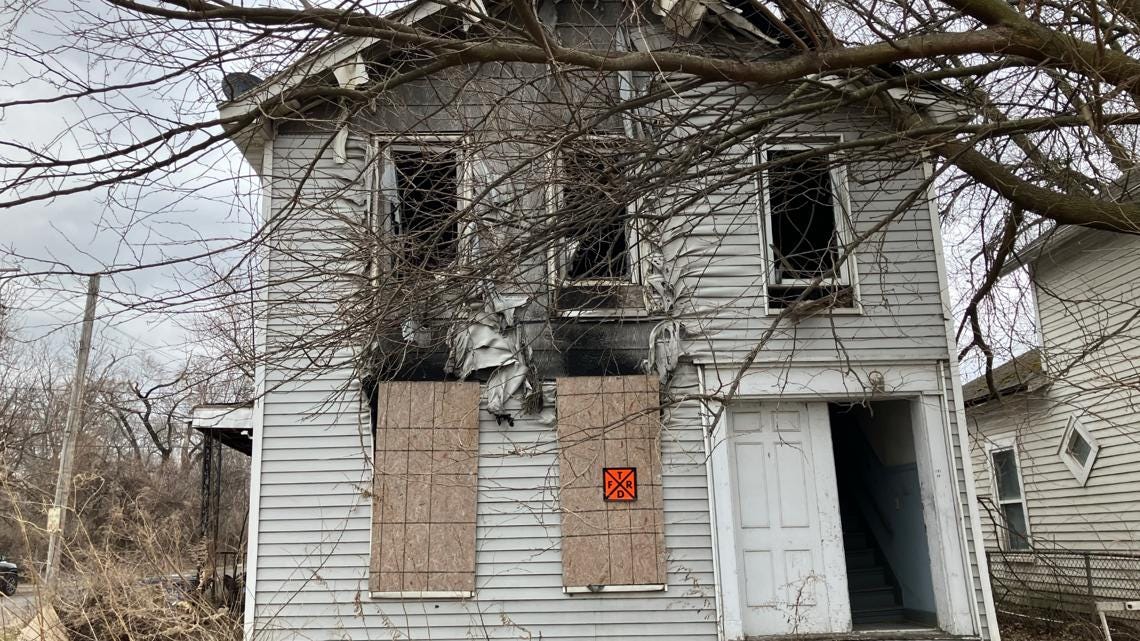
As a veteran of leaky roofs and flooded basements, heavy rain always makes me think of security and disaster, and I can’t begin to guess how many of the structures I just passed are taking on water right now. Every time I open my garage door at the warehouse, I expect to see a sheen of puddles on the floor, the bottom rows of my CD shelves wicking up moisture as their booklets swell and mottle. I’ve mentioned it before, but all of northwest Ohio was once an impermeable swamp, and all it ever wants to do is be a swamp again.
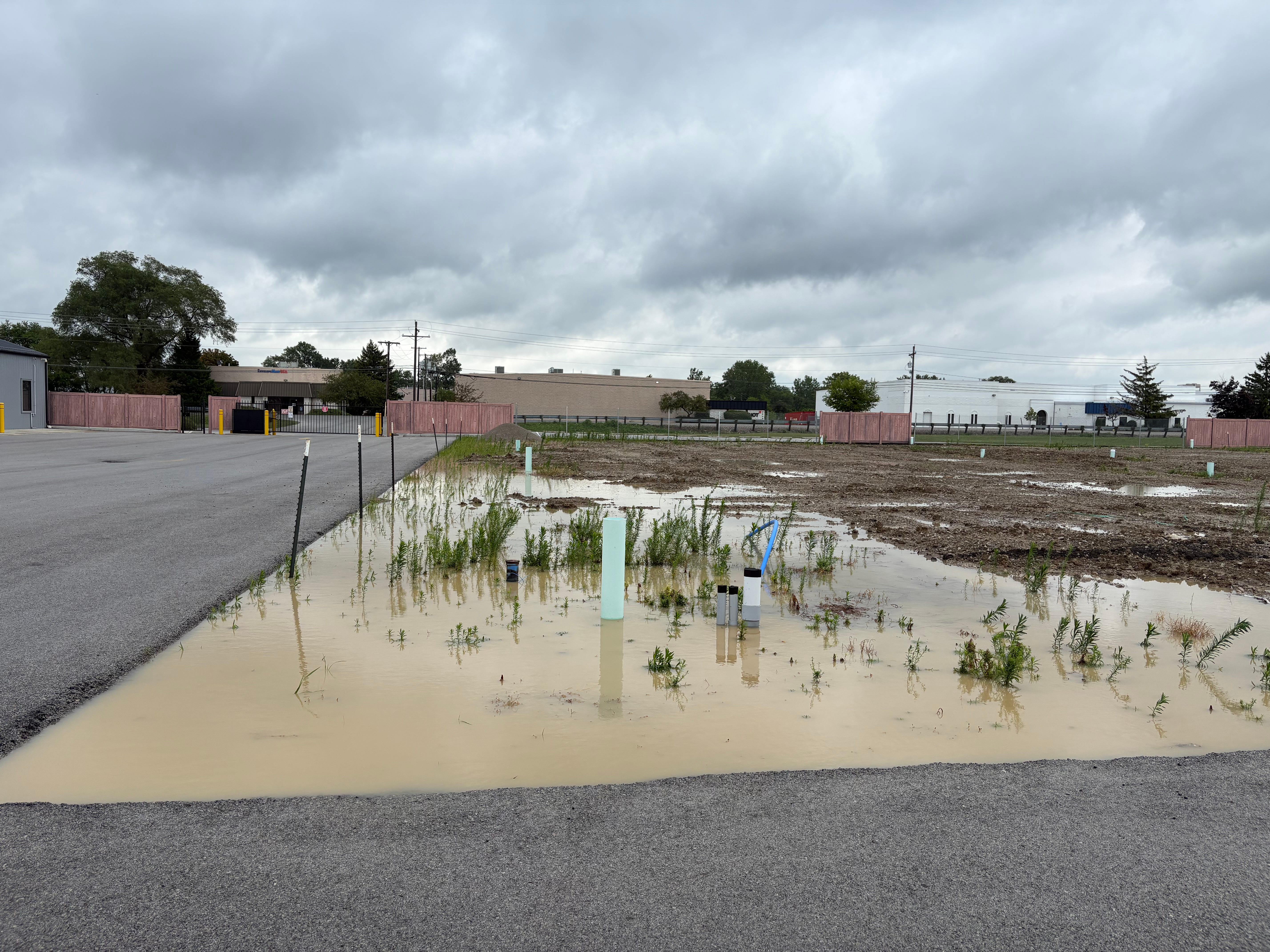
The empty lot being prepped for the next bloc of warehouses is evidence of nature trying to reclaim its own, but the drainage system in my little corner is still top-notch, and I’m able to pull up to the door and hustle the goods into my warm dry space without incident. This is what I pay for in my less-unsuccessful middle age: climate control, safety, dryness, stability. The me of thirty years ago would, and did, lease some of those collapsing monuments to globalization, and made up for the rent savings in lost inventory and crisis management.
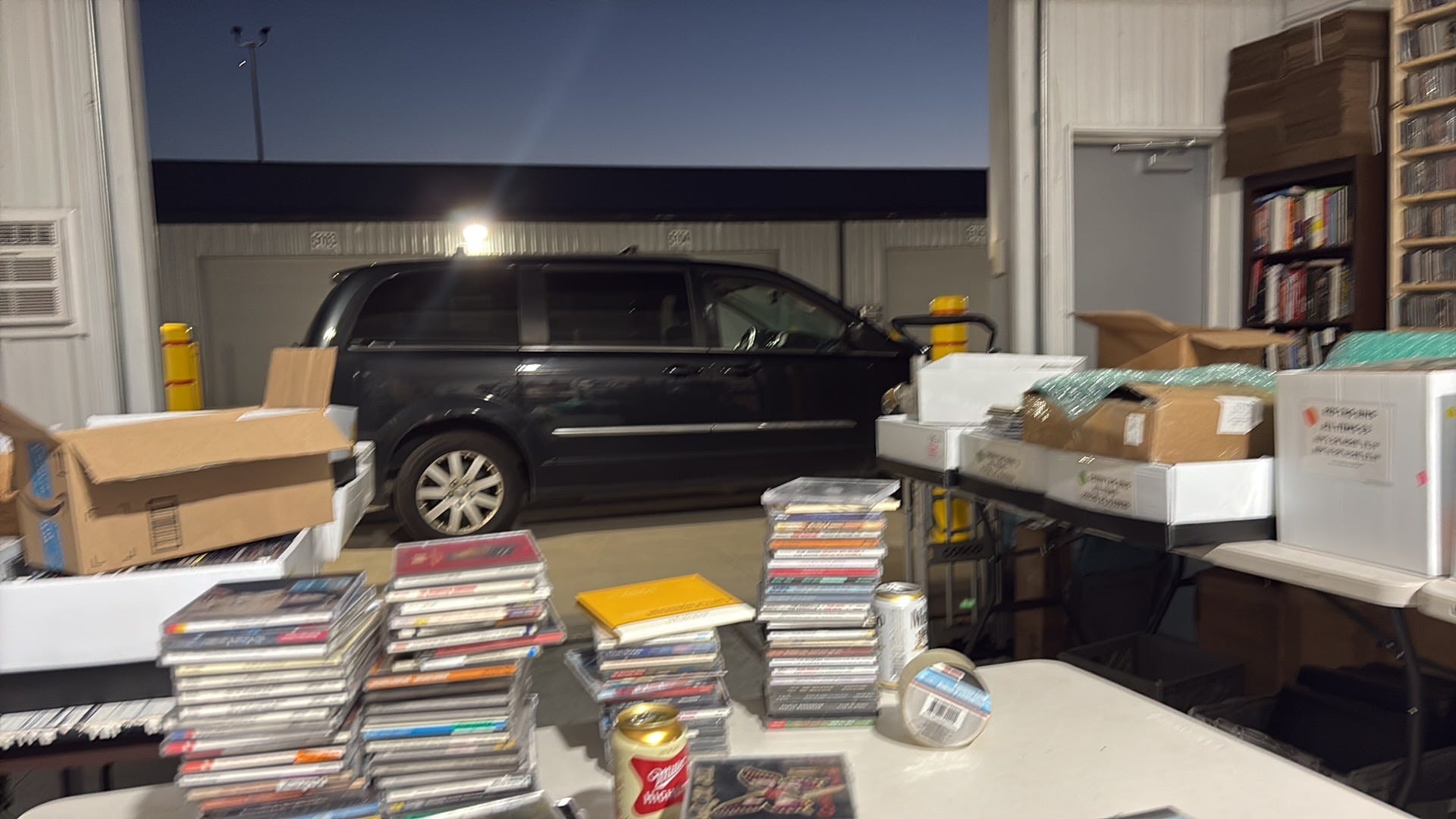
I realize as I sit down to pack orders that I need toner. Thanks to a quirk in the warehouse’s Wi-Fi, my printer doesn’t “talk” to my computer anymore, so I can’t have it automatically order its own replacement cartridges and have them delivered like I used to. I sigh and head back out into the rain, deciding to take the back roads to the sprawling suburban megaplex where the office supply store waits.
I get stuck behind a train partway there, with cars ahead of and behind me. I don’t mind much – I love looking at graffiti tags on railroad cars, and this day’s already lumbering along at a sodden pace. I watch the water collecting in the ditches on the side of the road, and I think about what it would take to flood an area this flat, how few days it would take for all the man-made drainage to fail without constant maintenance, and how quickly this could all become mud and scrub grass and stagnant pools again.
While I’m contemplating this, the train slows, then stops, becoming a wall of rust and commerce. I have to wait for a few people behind me to give up and awkwardly back up before I can execute my own six-or-seven-point turn, retrace my steps, and make my way to the interstate I’d been trying to avoid.
The rain is finally letting up, though, and there’s a Goodwill next door to the office supply place, where a bunch of donated Tejano and jazz CDs await my procrastinating gaze. It’s well past noon by the time I finally make my way back to my desk, and I’m already editing the to-do list in my head to get the most important stuff done and leave time for evening plans.
I’m never really off the clock, it seems, but I’m never fully in the weeds with work, either. Most of my days tend to take this meandering tack, but they wind up with everyone getting their little treats in the mail and me getting ample goof-off time and snacks. I keep thinking there’s a better, more efficient system somewhere down the road, but the scenic route might just be my natural habitat.
Life is for the scenic route